Riesling

Weinhof Herrenberg, Schodener Herrenberg, Riesling "Cruv", 2008

Weinhof Herrenberg is Claudia and Manfred Loch's place, a tiny winery with just two hectares in Schoden on the River Saar that they have built up more or less from scratch, plot by plot, and with somewhat precarious resources. This is a very different history from the Van Volxem enterprise, which came with heavy investment, grander plans and more ambitious marketing from day one. Still, both outfits share some similarities. Both were willing to look beyond the winemaking traditions of the last few decades. Both managed to create a new kind of Saar Riesling that was actually a recreation of the pre-1950s style: Ripe wines with more powerful fruit and less prominent acidity than has been, and still is, "traditional" on the Saar. With their enthusiasm and nonconformism they have, between them, managed to break open the wine scene on this Mosel tributary, which had been dominated by an establishment of aristoricatic estates with a somewhat patrician attitude. High time we had a closer look at what Herrenberg has to offer, then, and we'll start with one of their mid-range dryish Riesling (they only make Riesling):

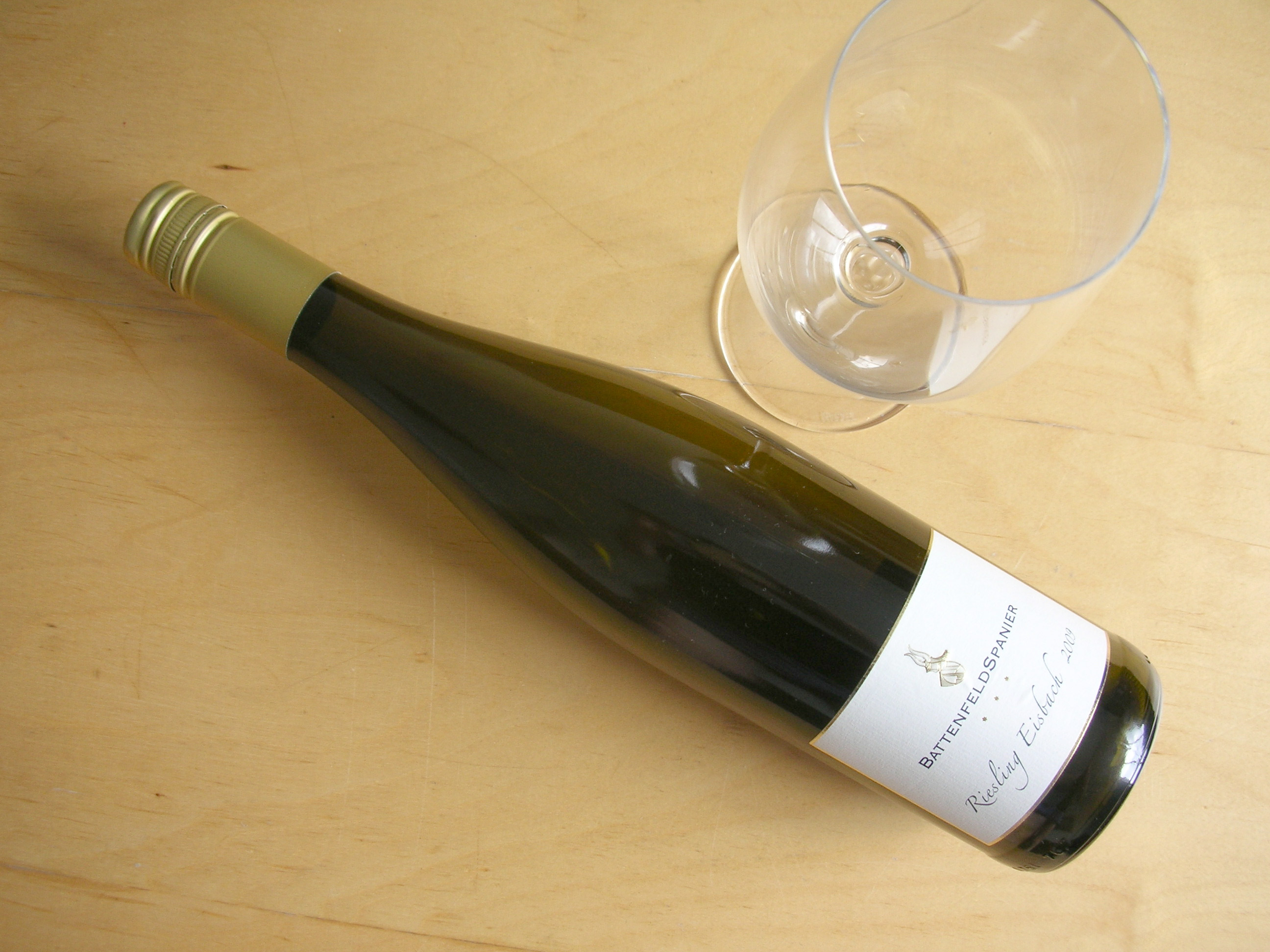
Battenfeld-Spanier, Riesling Eisbach, 2009

The 2009 vintage in Germany has received lots of praise, in many cases way before the first wines were bottled and sometimes even before the last grapes were harvested. So it is high time for the Wine Rambler to more systematically explore what the vintage has to offer. Today's object of study, a Riesling (from the Rheinhessen region) that answers to the name of Ice Stream ('Eisbach'). It is one of the basic wines produced by the Battenfeld-Spanier winery, just a little above their range of entry wines. Over the past years, Battenfeld-Spanier have built up an impressive reputation, both for entry and grand cru level wines, so I was curious to eventually get round to try one of their Rieslings.

Matching food and wine: a tarragon custard on raspberry purée dessert with sweet Riesling

With the raspberry season coming to an end, it is high time to write up what is one of my favourite desserts and also one of my favourite wine and food pairings: tarragon custard on raspberry purée with a lovely, sweet Riesling from the Mosel. This recipe brings together sweet, sour, acidity, bitterness, fruit and a herbal creaminess - components that are present in both wine and pudding.

You will need for this (for four): raspberries (200g), sugar (50g), fresh tarragon, 4 eggs, double cream (150ml), milk (150ml) and cocoa powder. And a sweet Riesling, of course.

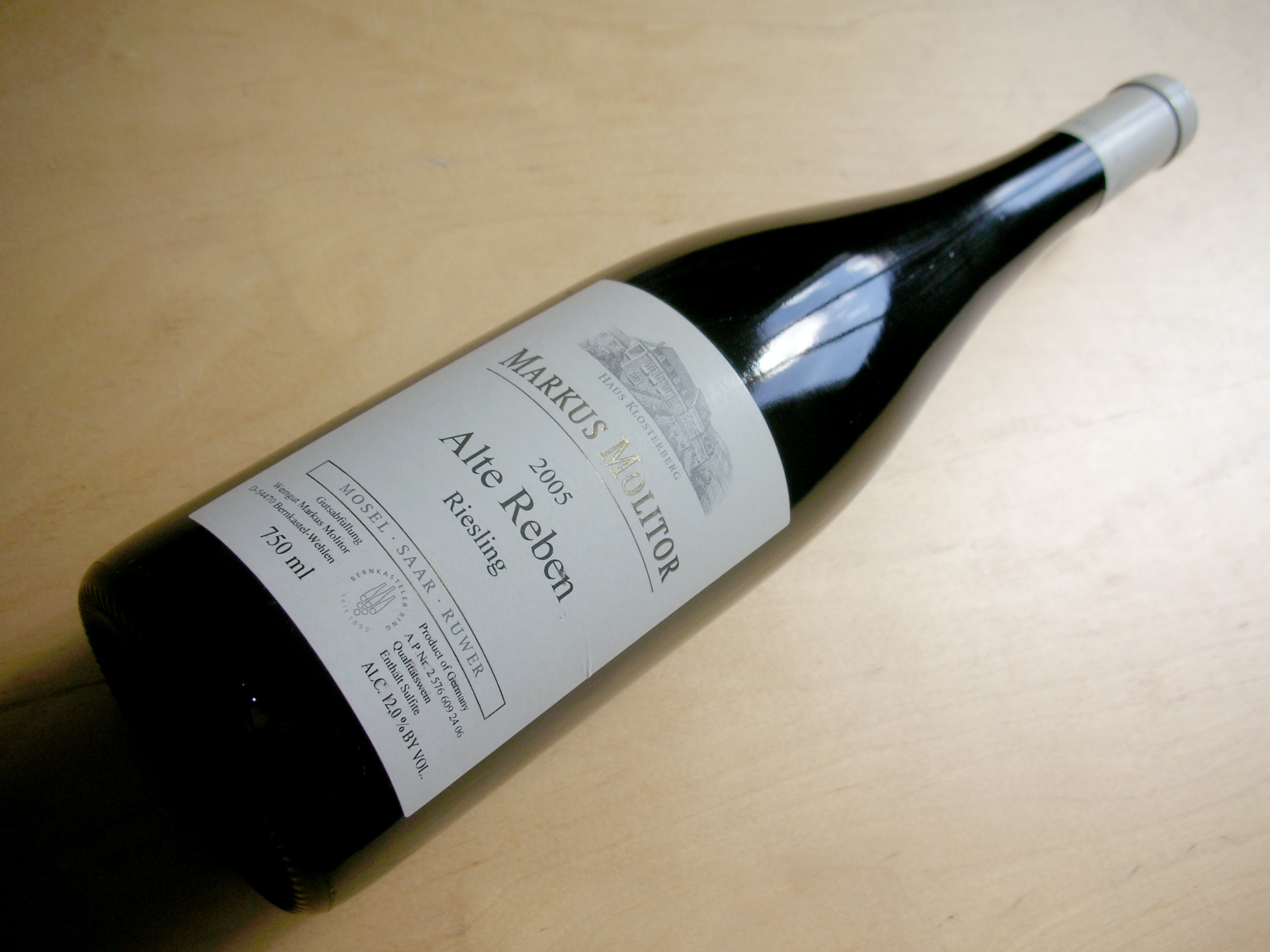
Markus Molitor, Alte Reben, Riesling, 2005

Mosel Riesling, the embodiment of German wine - at least in foreign perception. Readers of the Wine Rambler will not have to be told that there is so much more to German wine than Mosel Riesling. Still, every so often reminding everyone of the fantastic wines that come out of this area cannot hurt. One of our favourite producers at the Mosel is Markus Molitor (who also makes fantastic Pinot Noir). And one of the best Molitor wines I have had is, no, it is not one of the prestigious Auslese or Trockenbeerenauslese wines, it is a 'Qualitätswein'. These quality wines are somewhere in the middle of the German classification system - but don't let these bureaucratic details fool you. You are looking at pure awesome, and at amazing value too.

Van Volxem, Scharzhofberger Riesling, 2008

You have never heard the name 'Scharzhofberg' before? Well, take a pen (or a keyboard) and write it down. Scharzhofberg is the name of a German vineyard, located near the Saar river (close to the Mosel). There are of course many vineyards in Germany, but Scharzhofberg has an excellent reputation and may be one of the most expensive bits of real estate in German winemaking - if you could buy land there, as producers jealously guard every square meter they own. Land rarely changes hands there, but the Van Volxem estate is lucky enough to own a small part of the 28 hectare vineyard. So let's have a look at what they can do with it, shall we?

A. J. Adam, Riesling Kabinett, 2007

It may not be a polite subject, but there's no dancing around the issue: Deep-dyed mosel Rieslings from slate soils can give off a bit of an odour. You expect a bit of a mosel funk, you appreciate a bit of a mosel funk, yet in my humble mosel experience so far, here's the undisputed sultan of stink: Andreas Adams's Kabinett gives you your petrol spill, your car dealership, but throw in used motor oil, a sulphur spring and some rotten eggs, and you're getting closer. Very distinctive, if you like this kind of thing. And I certainly do. Beneath the stink, or maybe it's better to stay borne on the stink, are ripe apricots, deep stony minerality and a whiff of caramel. The fruit is really subdued at this stage of early maturity, the acidity is not much of a presence either, and it's really the hard-core slate minerality that is the blood and bones of this ultra-trad Kabinett.

Salwey, Riesling Eichberg GG, 2008

Germans love dry wine - this still comes as surprise to many foreigners who think of Germany as country of sweet wine. Actually, almost two thirds of all wine produced in Germany is dry. On top of that the VdP, the association of top producers, are currently pushing for a new top category in the wine classification system that applies to dry wine only. This is where the label 'GG', short for 'Großes Gewächs' (literally 'great growth') of today's Riesling from Baden comes from.
In order to be classified as GG, a wine has to come from a certified top vineyard, yields have to be low, only grape varieties that have some tradition in the region can be used, grapes have to be harvested selectively by hand and the wine has to have the same quality level as a late harvest. And, of course, the producer has to be a member of VdP. The Baden winemaker family Salwey are, and this is their 2008 GG Riesling.

Haart to Heart, Riesling, 2008

The 'Haart' in the Riesling with the funny name 'Haart to Heart' is not a spelling mistake. In fact, it comes from the Haart winery, who make some of our favourite sweet Mosel Riesling. It also seems they like a good pun, at least if it comes to labelling their basic Riesling. The 'Heart to Haart' is the only Haart wine that comes with a screw cap and without the 'eagle logo' of the VdP, the elite club of German wine makers, that is proudly displayed on all other Haart bottles. This is because in some years at least part of the grapes for the Haart to Heart are sourced from other growers, but this does not appear to have been the case for a while now. So, as far as the Haart winery is concerned it does not get more basic than this. How basic is basic?

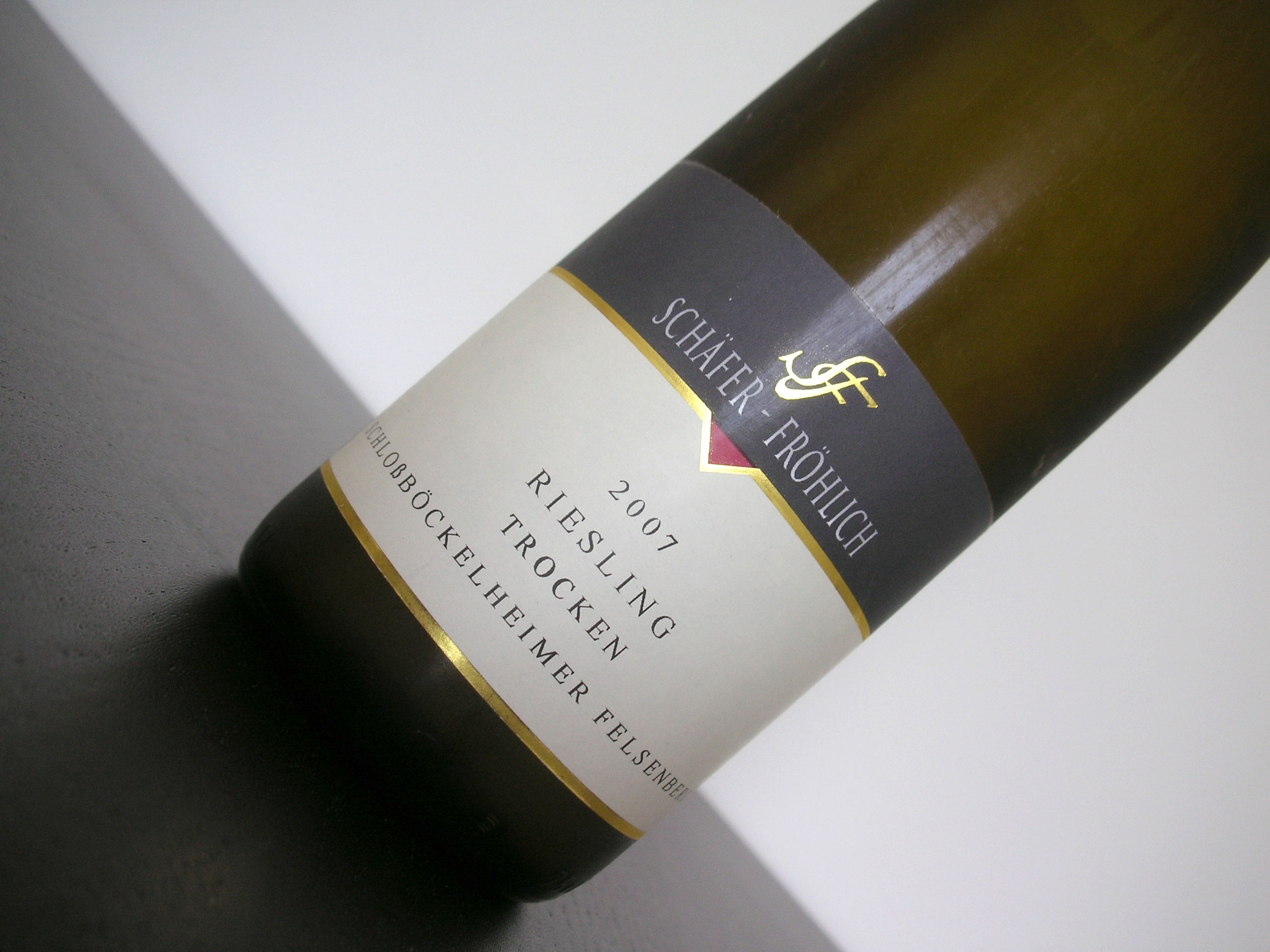
Schäfer-Fröhlich, Schloßböckelheimer Felsenberg, Riesling trocken, 2007

Schäfer-Fröhlich (literally Shepherd-Cheerful) is the name of a very well respected, family-owned winery in the Nahe region. Despite a recent increase in red wine production, the Nahe is still mostly a white wine region, with Riesling being the most popular variety. The same is true for Schäfer-Fröhlich, a Riesling-focussed winery that over the past few years got a lot of good press. For instance, they were awarded the title of 'winery of the year 2010' by wine guide Gault Millau, they won the #1 Riesling trophy from Vinum wine magazine for 2009 and food magazine Feinschmecker crowned one of their 2008 Rieslings as the best dry Riesling in all of Germany. So you can imagine I was really looking forward to trying a Schäfer-Fröhlich, even if it was only one of their basic wines. Sadly, it did not quite live up to my expectations.

torsten Monday, 05/07/2010
Reinhold Haart, Piesporter Grafenberg, Riesling Kabinett, 2008

When you put your nose into a glass of wine and it smells a little bit like a car dealership, but in a good way, you can be fairly certain that you have a Riesling in front of you. This Haart Riesling from the Mosel is not one of the petrol noses, so please don't think of a garage wit lots of oil and grease, but its bouquet has a little of the more refined version of that smell, just think of a BMW car dealership salesroom. Or rather walking through one while eating a peach.

torsten Wednesday, 23/06/2010