dry

These wines are dry, or 'trocken' in German terminology, - either according to our palate or the classification of the winery.

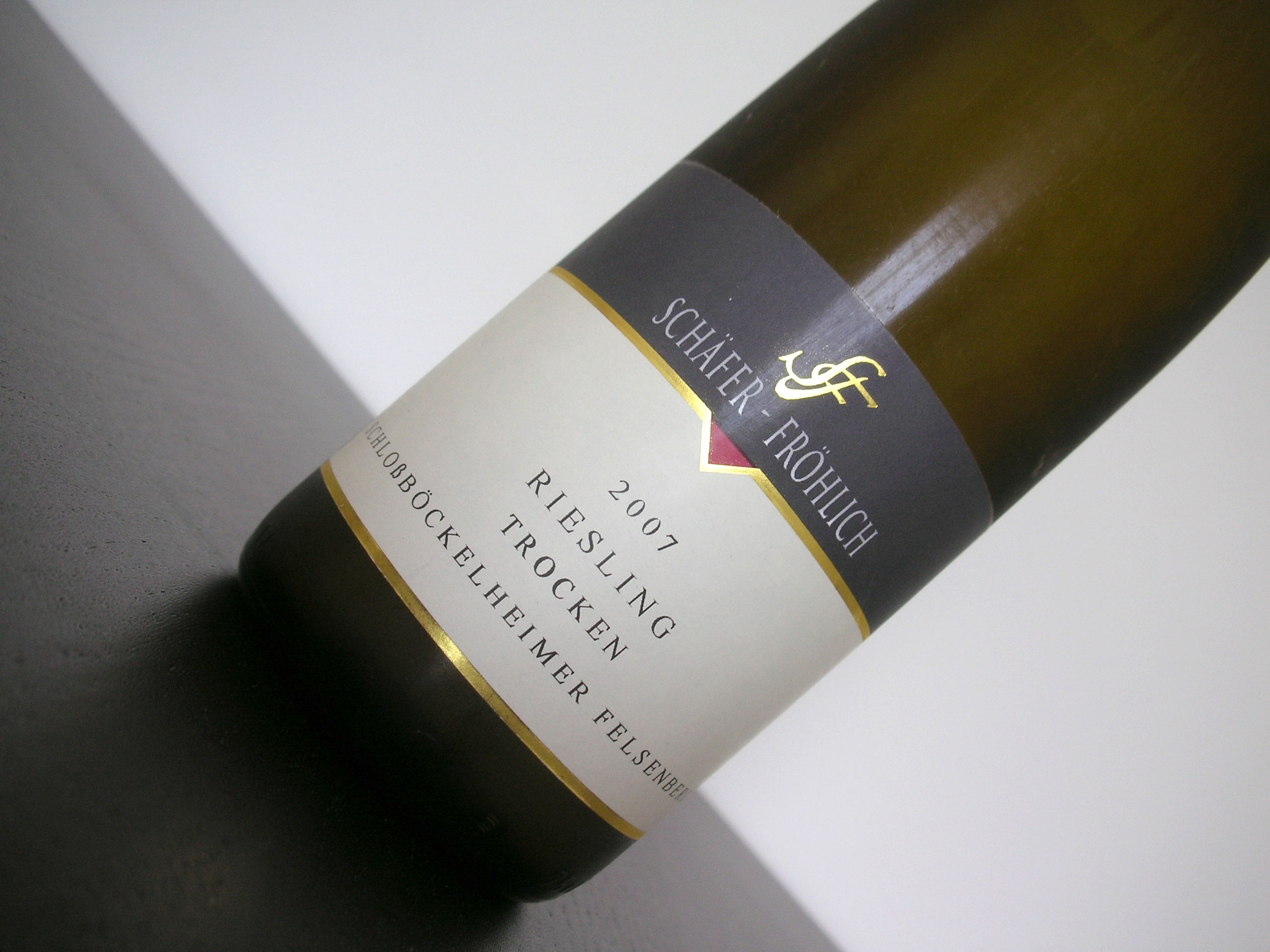
Schäfer-Fröhlich, Schloßböckelheimer Felsenberg, Riesling trocken, 2007

Schäfer-Fröhlich (literally Shepherd-Cheerful) is the name of a very well respected, family-owned winery in the Nahe region. Despite a recent increase in red wine production, the Nahe is still mostly a white wine region, with Riesling being the most popular variety. The same is true for Schäfer-Fröhlich, a Riesling-focussed winery that over the past few years got a lot of good press. For instance, they were awarded the title of 'winery of the year 2010' by wine guide Gault Millau, they won the #1 Riesling trophy from Vinum wine magazine for 2009 and food magazine Feinschmecker crowned one of their 2008 Rieslings as the best dry Riesling in all of Germany. So you can imagine I was really looking forward to trying a Schäfer-Fröhlich, even if it was only one of their basic wines. Sadly, it did not quite live up to my expectations.

torsten Monday, 05/07/2010

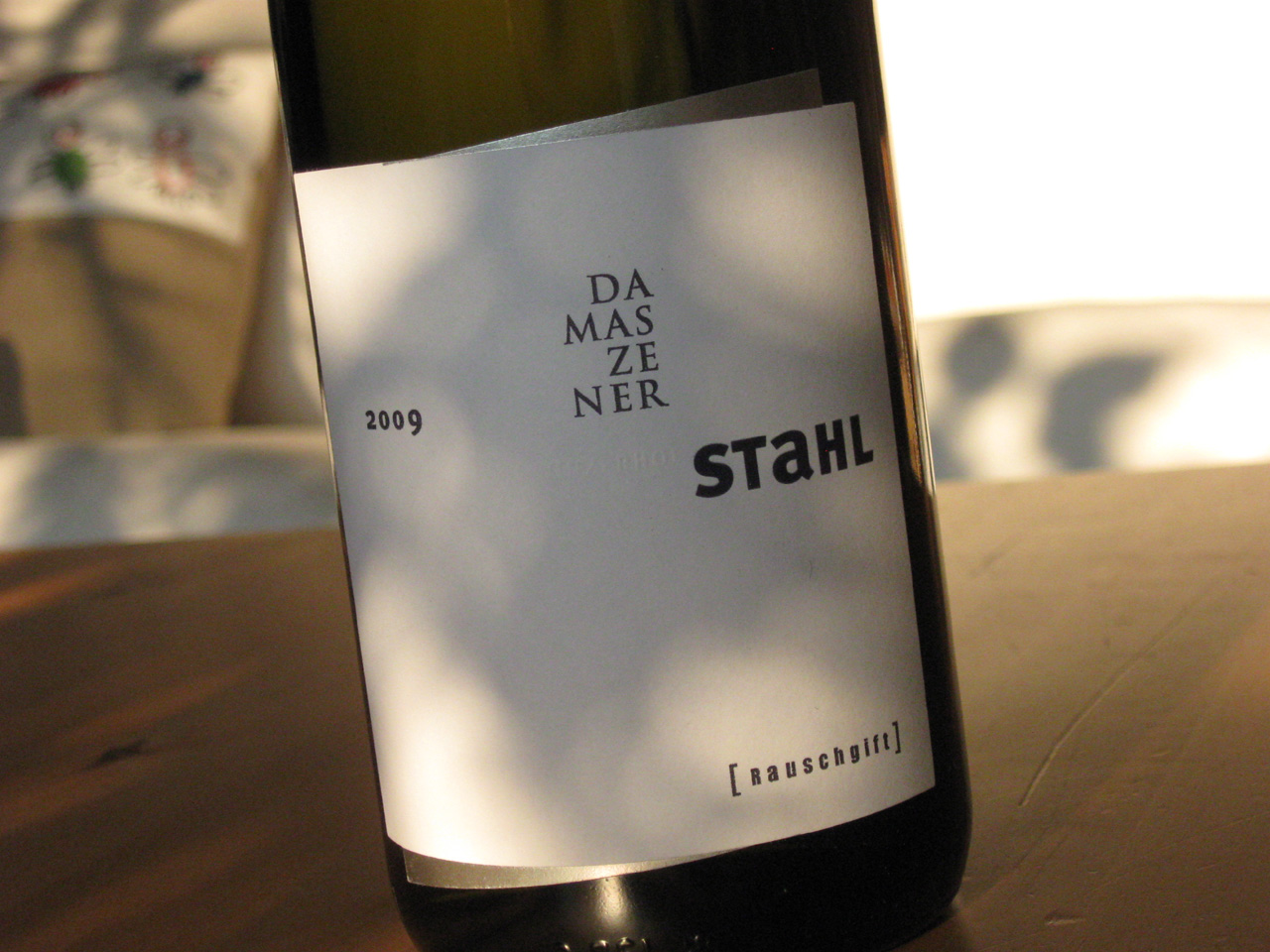
Winzerhof Stahl, Scheurebe "Damaszenerstahl", 2009

After more than one year of rambling across the homely green landscape of german wine, there are still a great many places the Wine Rambler has hardly even begun to go. Among them, the many white grapes outside the Riesling-Silvaner-Pinot triangle: One, the ubiquitous, but not-quite-so-banal Müller-Thurgau, we will investigate in some detail in the coming weeks. Another omission is Scheurebe. Scheurebe like this one here, made by Christian Stahl, one of the most interesting and ambitious young vintners of Franken:
Zehnthof Luckert, Silvaner trocken, 2008

At the Wine Rambler, we have this ongoing love affair with the Silvaner grape. Today's Silvaner comes from the German wine region of Franken, the spiritual home of this grape variety.

This is a textbook Silvaner in the best sense of the word. You get earthy, grassy notes, almost smoky. There is apple, refreshing in the nose and well defined on the tongue. At its core the Silvaner is robust, but smooth round the edges with notable minerality.

torsten Friday, 18/06/2010

Dr. Heger, Ihringer Winklerberg, Spätburgunder ***, 2000

If you are one of those thinking of German Pinot Noir as very light wine, pale in colour and neither substantial nor worth ageing then have a look at the wine below. And if you do not think about German red wine at all, well, then do the same. The two Wine Ramblers, at any rate, did also spend some time looking in amazement at the incredibly rich colour of the ten year old Spätburgunder that they had opened last weekend to celebrate one year of The Wine Rambler. Join us in the merriment:

Egon Müller, Kanta Riesling, 2006

After all those German and Austrian Rieslings, we are now going Australia. Clearly, the Wine Rambler is no nationalist. What could be more Australian, apart from Paul 'Crocodile Dundee' Hogan perhaps, than a Riesling from Adelaide Hills? Well, actually, it is sort of German too - at least the winemaker is (no one would have guess from the name 'Egon Müller').

torsten Sunday, 13/06/2010

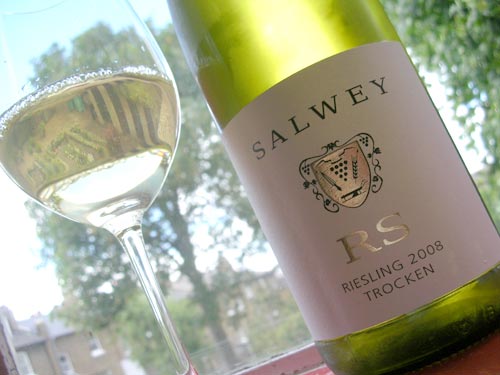
Salwey, Riesling RS trocken, 2008

If it comes to the Salwey winery, we have so far mostly sampled their range of excellent Pinots - Noir, Gris/Grigio and Blanc. Located in the warmest area of Germany, the volcanic Kaiserstuhl in the South West, the Salwey vineyards are very well suited for growing Pinot. As it turns out, they also make good Riesling there, and I had one of them recently with a nice piece of fish and English asparagus.

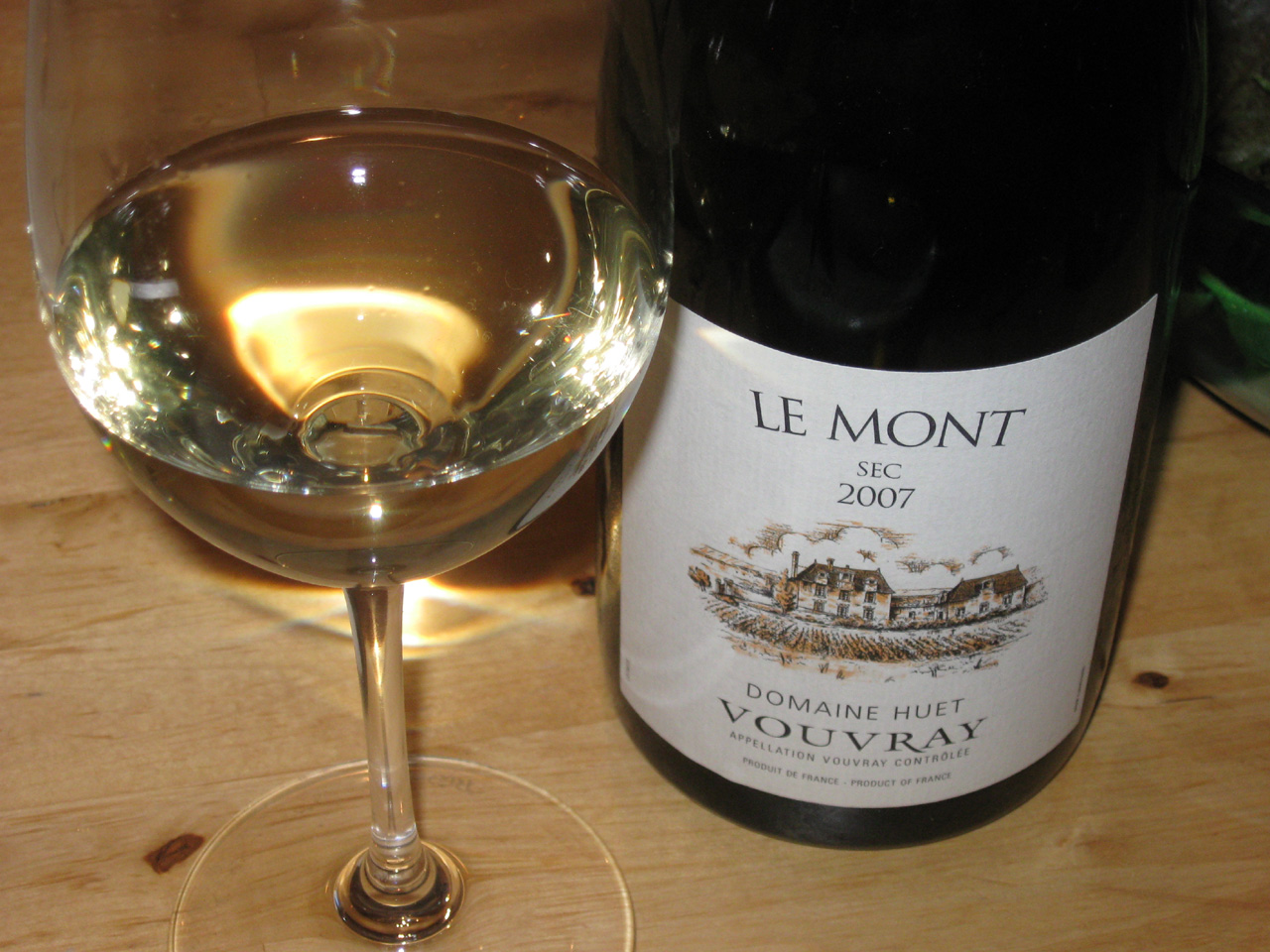
Domaine Huet, Vouvray Sec "Le Mont", 2007

With at least one Wine Rambler new year's resolution still unfulfilled, a sense of duty and self-discipline finally compelled me to open a Loire white. I also wanted to try one of the esoteric, hyper-regional french wines that the really knowledgeable cats like Cory Cartwright from Saignée are always on about. I had hoped for something original to broaden my wine horizon, but this Chenin Blanc from a legendary Vouvray producer turned out to be rather more - a real shock to the Riesling-saturated system.

Van Volxem, Weißburgunder, 2008

These days, I find myself drinking more and more Weißburgunder (Pinot Blanc). It can be very food friendly (especially when you go for lighter food, fish and the seasonal asparagus (even though the latter is always a bit tricky)) and I enjoy the contrast to the sharper Riesling. A particularly good and typical recent example for Weißburgunder came from the Saar river, very close to the Mosel. It looked a little bit like this:

Martin Müllen, Kröver Paradies, Riesling Auslese trocken, 1990

One of the less exciting things about living in London is not having a cellar. I sometimes feel a certain envy towards friends on the continent who 'of course' have a cellar and can put age-worthy wines away for a few years or even decades. So whenever I can get my hands on an aged wine I get pretty excited. Quality Riesling, particularly the sweeter ones, can age very well, but if you buy a twenty year old one it is always a gamble. Luckily, I got this one directly from the winery, so I was fairly certain it had been stored properly. Ladies and gentlemen, I present a good ol' boys Riesling from the Moselle:

Emrich-Schönleber, Riesling trocken, 2008

Lime, peach, mineral, herbs, peach, lime, good acidity - I do actually feel a little sorry for using these words here over and over again. But what can I do, these German Rieslings are just very good at delivering that - and the 2008 dry Riesling from the Emrich-Schönleber winery is no exception. In fact, it is a good example for a dry, crisp and fresh wine of this type that also comes at a reasonable price (especially if you take into consideration that it comes from one of Germany's most prestigious wineries).